In the previous article we saw that the main reason of the complexity of the Japanese writing system is its history. But it’s not the only one. The Japanese are most likely to preserve their writing system as it is, because it represents the part of their culture, the part of their soul.
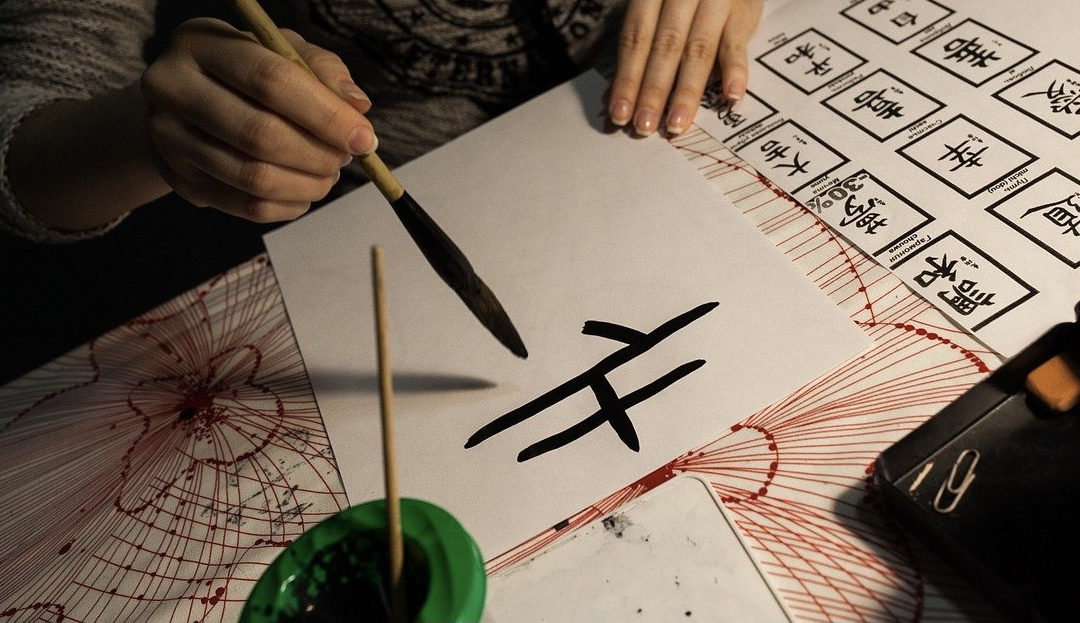
Kanji or kana written on paper or on another surface are recognized as a piece of art. In Japanese high schools the calligraphy (shodo) can be chosen as an art class, just like music or painting. The calligraphy performances by professional of amateur calligraphers (the concerts when Japanese characters are written on huge canvases with huge brushes in the manner of a dance accompanied by music) are very popular in Japan.
Can Anyone Practice Calligraphy?
The revived interest in calligraphy today is characterized by its broad latitude for creativity. If at first Japanese calligraphy represented copying of the Chinese works and mostly practicing in writing, the Japanese Zen Buddhists used calligraphy as a means of meditation and expression of the connection with a spiritual world. In the middle of the XX century an abstract style of calligraphy emerged. It no longer focuses on the shape of the character, but mostly on expression of the authors feelings and thoughts.
As an art shodo is increasingly admired not only by Japanese but also by foreign people.